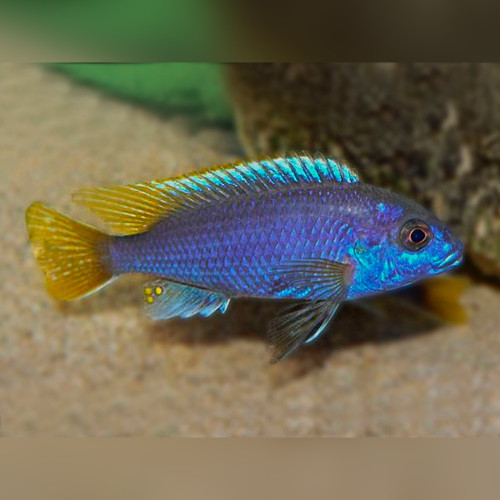

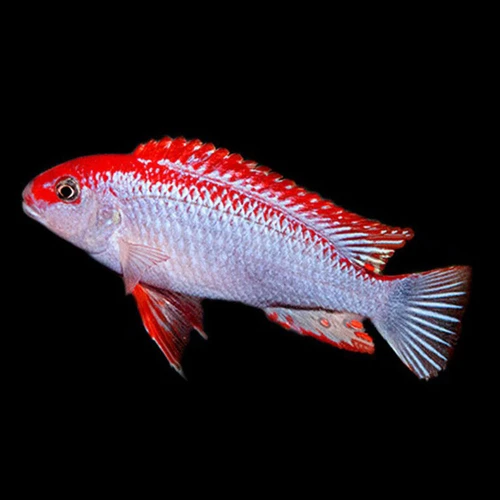
Our Guide To Keeping Pseudotropheus Ndumbi Red Top Cichlid Fish
-
About Fish Species:
- Scientific name: Pseudotropheus sp. "Ndumbi Red Top"
- Common name: Ndumbi Red Top
- Family: Cichlidae
- Origin: Lake Malawi, Africa
- Adult length: 10-12 cm
- Lifespan: 8 to 10 years
- Diet: Omnivore
- Care Level: Moderate
- Temperament: Semi-aggressive
-
Tank Setup:
- Ndumbi Red Top Cichlids require a rocky aquascape with caves and crevices to mimic their natural habitat in Lake Malawi.
- A minimum tank size of 150L is recommended for a small group, with larger tanks preferred for multiple males to reduce aggression.
- Use sand or fine gravel as a substrate, and ensure there are plenty of hiding spaces for territorial behaviors.
-
Water Parameters:
- These cichlids prefer alkaline water conditions with a pH range of 7.8 to 8.6.
- Maintain a water temperature between 24 to 28°C (75 to 82°F).
- Ensure hard water conditions with a GH of 10-20 dGH for their optimal health.
-
Filtration and Water Flow:
- Moderate to strong water flow is ideal, mimicking the currents in Lake Malawi.
- Use a high-quality filter to maintain excellent water quality, as cichlids produce significant waste.
-
Diet:
- Ndumbi Red Tops are omnivores, but their diet should primarily consist of herbivorous foods.
- Feed them high-quality cichlid pellets or flakes, supplemented with spirulina, blanched vegetables, and occasional protein sources like brine shrimp.
- Avoid excessive meaty foods, as it can lead to digestive issues like Malawi Bloat.
-
Tank mates:
- Compatible with other Lake Malawi Mbuna cichlids, but aggression should be monitored.
- Avoid keeping them with overly aggressive species like larger Haplochromis or Peacock Cichlids.
- Best housed in a species-only tank or a carefully selected Malawi Mbuna community.
-
Behavior and Compatibility:
- Semi-aggressive and territorial, especially males during breeding.
- Best kept in a group with a higher female-to-male ratio to reduce male aggression.
- They display interesting social behaviors, including hierarchy establishment and territory defense.
(No reviews yet)
Write a Review