

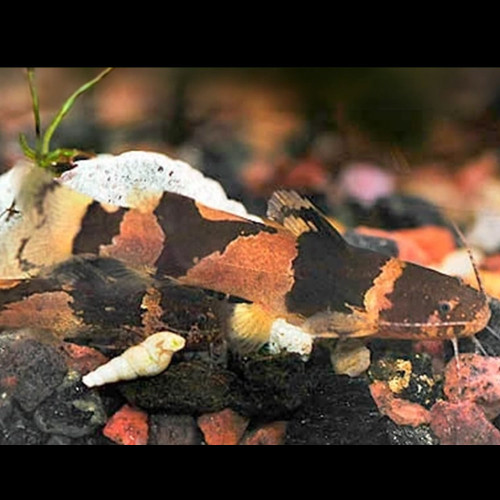
Our Guide To Keeping South American Bumblebee Catfish
-
About Fish Species:
- Scientific name: Microglanis iheringi
- Common name: South American Bumblebee Catfish
- Family: Pseudopimelodidae
- Origin: South America, including river systems and tributaries in Venezuela, Colombia, and surrounding regions
- Adult length: 7 to 9 cm
- Lifespan: 5 to 8 years
- Diet: Carnivore
- Care Level: Easy to Moderate
- Temperament: Peaceful but predatory towards very small fish and fry
-
Tank Setup:
- South American Bumblebee Catfish are shy, nocturnal bottom-dwellers that need a mature aquarium with plenty of secure hiding places. A minimum tank size of 75L is recommended for a single fish or small group.
- Provide a soft sand substrate, driftwood, rocky caves, smooth stones, and dense planting to create shaded areas where the fish can rest during the day.
- They appreciate a dimly lit aquarium with plenty of cover, as they are most active after the lights go out.
- Make sure caves and hiding places are large enough for the fish to enter and turn around comfortably, but snug enough to help them feel secure.
-
Water Parameters:
- South American Bumblebee Catfish prefer slightly acidic to neutral water conditions with a pH range of 6.0 to 7.5.
- Keep the water temperature between 22 to 26°C (72 to 79°F).
- They are relatively adaptable but do best in clean, stable water with regular maintenance and good oxygen levels.
-
Filtration and Water Flow:
- A gentle to moderate water flow is suitable for South American Bumblebee Catfish, as they enjoy well-filtered water without being exposed to strong currents across the bottom of the tank.
- Use a reliable filter and carry out regular water changes to maintain excellent water quality, as this species can be sensitive to poor conditions over time.
- Position decor to create both sheltered resting areas and open spaces for the fish to explore at night.
-
Diet:
- South American Bumblebee Catfish are carnivores and should be offered a varied diet of sinking foods. Good staple options include sinking carnivore pellets, catfish tablets, and insect-based granules.
- Supplement their diet with frozen or live foods such as bloodworms, brine shrimp, daphnia, tubifex, chopped earthworms, and mosquito larvae.
- As they are mostly nocturnal, feed them shortly before or just after the aquarium lights go out to make sure they receive enough food.
- They may eat very small fish, fry, or tiny shrimp, so avoid keeping them with tank mates small enough to fit in their mouth.
-
Tank mates:
- South American Bumblebee Catfish are generally peaceful with fish too large to be eaten and can work well in calm community aquariums.
- Suitable tank mates include medium-sized tetras, peaceful barbs, rainbowfish, Corydoras, Bristlenose Plecos, larger rasboras, dwarf cichlids, and other peaceful bottom-dwelling species.
- Avoid keeping them with tiny nano fish, very small shrimp, fry, or aggressive fish that may harass them while they are hiding.
- They can usually be kept singly or in small groups, provided there are enough caves and hiding places for each fish.
-
Behavior and Compatibility:
- South American Bumblebee Catfish are secretive and mostly nocturnal, often spending much of the day hidden among wood, plants, or rockwork.
- They become more active in the evening and may patrol the bottom of the aquarium looking for food after dark.
- Although peaceful, they are opportunistic predators and should not be trusted with very small fish or newly born fry.
- They are best suited to a peaceful, well-structured aquarium where they can hide during the day and feed without competition at night.
(No reviews yet)
Write a Review


