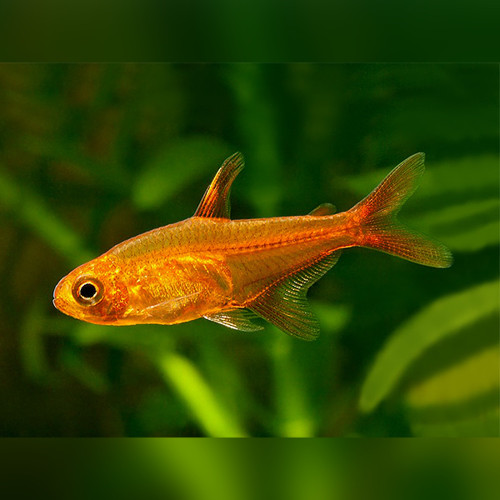


Our Guide To Keeping Muzel Red Cherry Tetra Fish
-
About Fish Species:
- Scientific name: Hyphessobrycon sp. "Muzel Red Cherry"
- Common name: Muzel Red Cherry Tetra (also sold as Red Cherry Tetra / Cherry Red Tetra)
- Family: Characidae
- Origin: South America (commonly listed from the Mato Grosso region of Brazil in the trade)
- Adult length: 2.5 to 4 cm (occasionally reported up to ~5 cm)
- Lifespan: 3 to 5 years
- Diet: Omnivore (micro-predator)
- Care Level: Easy to Moderate
- Temperament: Peaceful, shoaling
-
Tank Setup:
- Minimum tank size: 40 litres for a proper group (8–10 fish), though 60 litres+ is even better for calmer schooling behaviour and colour.
- Aquascape: A planted layout suits them best—think dense stems and broad-leaf plants, plus driftwood and a few shaded areas.
- Lighting: Softer or diffused lighting (floating plants help) will usually bring out richer reds and reduce skittishness.
- Substrate: Dark sand or fine gravel tends to make their colours pop and feels more “secure” for them.
-
Water Parameters:
- pH: 6.0 to 7.5
- Temperature: 22 to 28°C (72 to 82°F)
- Hardness: Soft to moderately hard water is ideal (often listed around 3–10 dGH).
- Stability: Keep ammonia and nitrite at 0, and aim for consistently low nitrate with regular water changes.
-
Filtration and Water Flow:
- Flow: Gentle to moderate flow suits them best—avoid blasting currents that stop them schooling naturally.
- Filtration: A cycled filter with steady biological filtration is more important than “huge” turnover; add a pre-filter sponge if you’re keeping them with other nano fish.
-
Diet:
- Staple foods: High-quality micro pellets, small granules, or fine flake.
- Boost foods: Frozen/live daphnia, cyclops, baby brine shrimp, and bloodworm (small portions) will improve condition and colour.
- Feeding routine: Small meals 1–2 times daily works well—feed what they’ll finish in a minute or two.
-
Tank mates:
- Best choices: Other peaceful nano/community fish—small tetras, rasboras, pencilfish, Corydoras (dwarf species work brilliantly), Otocinclus, and other calm bottom dwellers.
- Avoid: Aggressive fish, persistent fin-nippers, and anything big enough to view them as snacks.
-
Behavior and Compatibility:
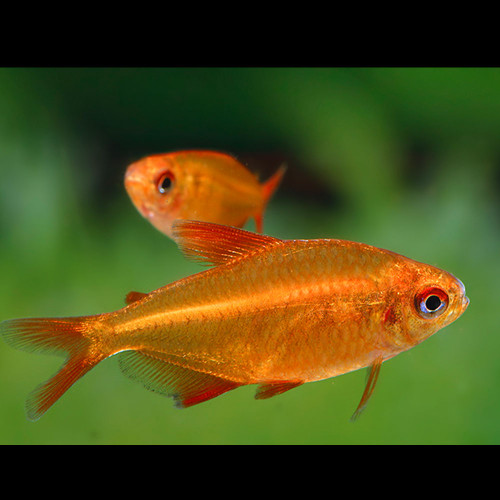
- Schooling: They’re a loose shoaling tetra—keep at least 6, but you’ll usually see the best confidence and colour in groups of 8–12+.
- Confidence cues: In sparse tanks they can look washed out or hide; with plants, cover, and a proper group, they settle and become far more active.
- Sexing: Males are often reported to grow a bit larger and show more finnage than females.
(No reviews yet)
Write a Review