


Our Guide To Keeping Copper Axolotls
-
About Copper Axolotls:
- Scientific name: Ambystoma mexicanum
- Common name: Copper Axolotl
- Family: Ambystomatidae
- Origin: Lake Xochimilco and the historic lake system surrounding Mexico City, Mexico
- Adult length: Approximately 20 to 30 cm
- Lifespan: Approximately 10 to 15 years with suitable care
- Diet: Carnivore
- Care Level: Moderate
- Temperament: Generally peaceful but opportunistic
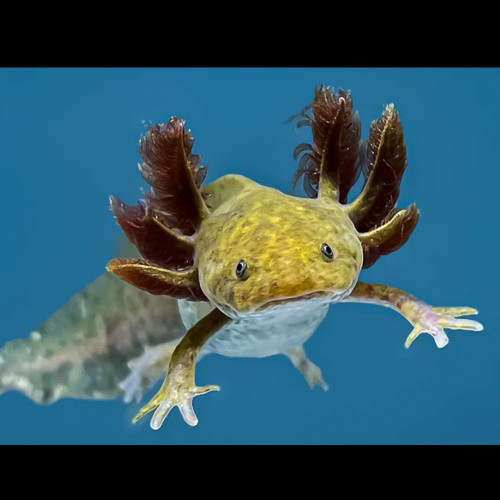
- Colour morph: Copper-brown, caramel or tan colouring, commonly accompanied by darker freckles and lighter-coloured eyes
-
Tank Setup:
- Copper Axolotls are fully aquatic amphibians and require a long aquarium with plenty of floor space. A minimum tank size of approximately 75L is recommended for one adult, although a larger aquarium of 90L or more provides more stable water conditions.
- Provide hides such as smooth caves, ceramic shelters, pipes and aquarium-safe ornaments. Each axolotl should have access to at least one secure hiding place.
- Use fine aquarium sand or leave the bottom bare. Avoid gravel and small stones because axolotls may swallow them while feeding, potentially causing an intestinal blockage.
- Choose smooth decorations without sharp or abrasive edges, as axolotls have delicate skin and external gills that can easily be damaged.
- Live plants such as Java Fern, Anubias, Java Moss and floating plants may be included. Attach plants to wood or rocks rather than relying on deeply rooted planting, as axolotls may disturb the substrate.
- Keep the aquarium covered securely because an axolotl may occasionally jump or climb towards an opening.
-
Water Parameters:
- Copper Axolotls require cool, clean and fully dechlorinated freshwater. Maintain a stable temperature between 16 and 18°C whenever possible.
- Avoid prolonged temperatures above 20°C, as warm water can cause stress, reduce oxygen availability and increase susceptibility to illness.
- Maintain a pH between approximately 6.5 and 8.0, with neutral to moderately hard water generally being suitable.
- Ammonia and nitrite should remain at 0 ppm, while nitrate should be kept as low as reasonably possible through regular water changes and aquarium maintenance.
- The aquarium must be fully cycled before introducing an axolotl. Test the water regularly using a reliable liquid test kit.
-
Filtration and Water Flow:
- Use an efficient biological filter capable of processing the relatively high amount of waste produced by an axolotl.
- Keep the water flow gentle. Strong currents can stress axolotls, causing them to hide excessively, curl their gills forwards or struggle to remain settled.
- Sponge filters and adjustable canister filters are suitable options. A spray bar or flow-reducing outlet may be used to disperse the current.
- Carry out regular partial water changes, normally around 20 to 30% each week, depending on stocking level and water-test results.
-
Diet:
- Copper Axolotls are carnivores and should receive a varied diet containing high-quality animal protein.
- Earthworms and appropriately sized nightcrawlers are excellent staple foods. Specialist sinking axolotl or carnivore pellets may also be offered.
- Frozen bloodworms, blackworms and similar foods can be used to provide variety, although bloodworms alone are not a complete staple diet for an adult axolotl.
- Feed juveniles daily or according to their size and body condition. Healthy adults are normally fed two to three times per week.
- Remove uneaten food promptly to prevent it from decomposing and reducing water quality.
- Avoid feeder fish, mammal meat and hard-shelled foods. Feeder fish may introduce parasites or disease and can injure an axolotl's delicate gills.
-
Tank Mates:
- Copper Axolotls are best maintained alone or with similarly sized axolotls under carefully managed conditions.
- Do not keep them with tropical fish because the temperature requirements are incompatible. Fish may also nip the axolotl's external gills or be swallowed.
- Avoid keeping very small axolotls with larger individuals because the larger animal may bite or consume the smaller one.
- When housing multiple axolotls, provide additional floor space, several hiding places and close supervision during feeding.
- Separate individuals immediately if persistent biting, missing limbs, damaged gills or competition for food is observed.
-
Behaviour and Compatibility:
- Copper Axolotls are generally calm animals that spend much of their time resting on the aquarium floor or beneath shelters.
- They may become more active during the evening, at night or when they detect food nearby.
- Although usually peaceful, axolotls have poor eyesight and may accidentally bite the limbs or gills of another axolotl while attempting to feed.
- Avoid unnecessary handling. Axolotls have delicate, permeable skin and should normally remain in the water.
- If an axolotl must be moved, guide it gently into a suitable container rather than lifting it with a net or bare hands.
-
Lighting:
- Axolotls do not require intense aquarium lighting and generally prefer dimly lit surroundings.
- Use low-intensity lighting and provide shaded areas, floating plants and enclosed hides where the axolotl can retreat.
- Avoid placing the aquarium in direct sunlight, as this can raise the water temperature and encourage excessive algae growth.
-
Important Care Information:
- The Copper Axolotl has the same husbandry requirements as other captive colour morphs of Ambystoma mexicanum. Its copper colouring does not require different water parameters or feeding.
- Healthy axolotls normally have a rounded body, an intact tail, clear skin and full external gills. Constantly curled-forward gills, a tightly curled tail tip, loss of appetite or unusual floating can indicate stress or illness.
- Axolotls can regenerate damaged limbs and tissues, but this ability should never be treated as a substitute for suitable housing and injury prevention.
- Seek advice from a qualified exotic-animal veterinarian if the axolotl develops persistent floating, fungal growth, wounds, swelling, rapid weight loss or prolonged refusal to eat.
(No reviews yet)
Write a Review


