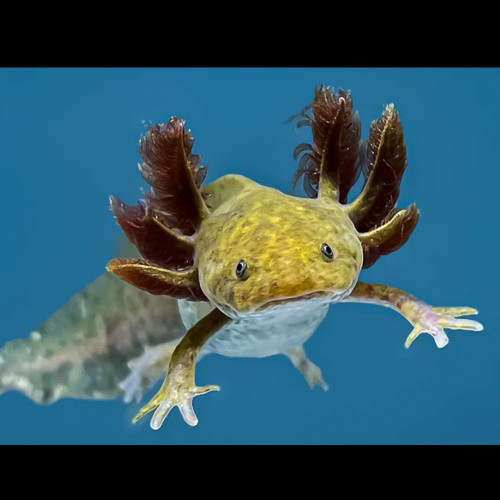

Our Guide To Keeping Wild Green Axolotls
-
About Fish Species:
- Scientific name: Ambystoma mexicanum
- Common name: Wild Green Axolotl
- Family: Ambystomatidae
- Origin: Lake Xochimilco and the former Lake Chalco system in Mexico
- Adult length: 20 to 30 cm
- Lifespan: 10 to 15 years
- Diet: Carnivore
- Care Level: Moderate
- Temperament: Generally peaceful but may bite smaller tank mates
-
Tank Setup:
- Wild Green Axolotls require a spacious aquarium with plenty of floor space. A minimum tank size of approximately 75L is recommended for one adult, although a larger aquarium is preferable.
- Use a bare-bottomed tank or very fine sand. Avoid gravel, stones or decorations small enough to be swallowed, as axolotls may ingest them while feeding.
- Provide smooth hides, caves and shaded areas where the axolotl can rest. Ensure all decorations have rounded edges to protect its delicate skin and external gills.
- Axolotls prefer subdued lighting. Floating plants or low-light aquarium plants can help create a comfortable, shaded environment.
-
Water Parameters:
- Wild Green Axolotls prefer cool, clean water with a pH range of approximately 6.5 to 8.0.
- Keep the water temperature between 14 and 20°C. Temperatures above 22°C can cause stress and increase the risk of illness.
- Ammonia and nitrite should always remain at 0 ppm, while nitrate should be kept as low as possible through regular partial water changes.
-
Filtration and Water Flow:
- Use an efficient biological filter that produces a gentle current. Axolotls dislike strong water movement, which can cause stress and make their external gills curl forwards.
- Sponge filters, spray bars and adjustable-flow filters are suitable options. Protect filter intakes to prevent the axolotl's limbs or gills from being injured.
-
Diet:
- Wild Green Axolotls are carnivorous and should be offered a varied, protein-rich diet. Earthworms and specialist sinking axolotl pellets make excellent staple foods.
- Their diet can also be supplemented with frozen bloodworms, suitable aquatic invertebrates and occasional pieces of raw, unseasoned freshwater fish.
- Juvenile axolotls usually require feeding once or twice per day, while healthy adults can generally be fed every two to three days.
- Remove uneaten food promptly to prevent it from decomposing and affecting the water quality.
-
Tank Mates:
- Wild Green Axolotls are best kept alone or with other axolotls of a similar size. Smaller individuals may be bitten or mistaken for food.
- Most fish are unsuitable tank mates because they may nip the axolotl's external gills, compete for food or be swallowed.
- Do not keep axolotls with aggressive fish, tropical fish requiring warm water, crayfish or other animals that could injure them.
-
Behaviour and Compatibility:
- Wild Green Axolotls are primarily bottom-dwelling amphibians that spend much of their time resting, exploring the aquarium floor or waiting for food.
- They have poor eyesight and frequently investigate their surroundings by smell and movement. They may accidentally nip another axolotl during feeding.
- Although they can regenerate damaged limbs and other tissues, injuries should still be prevented through careful aquarium design and appropriate tank-mate selection.
- Handle axolotls only when absolutely necessary because their skin is delicate and their protective slime coating can be damaged easily.
(No reviews yet)

Write a Review